Cellular pathology reports were among the first to be digitized in the UK's national transition from paper-based to digital health data systems in the early 1990s. Early systems were stand-alone, with unique and clunky code and challenging data extraction routines.
Although valuable in their time, these systems were not designed for integration into the modern Electronic Patient Record (EPR) and files were effectively and functionally lost as legacy computer systems were replaced.
Three decades on, there is a rich internet resource on archiving policies and on the accurate and immediate dissemination and storage of e-pathology results. However, the global literature and internet resources have almost nothing to say on the ‘retrieval and display of old cellular pathology reports’, as the natural corollary of their 'archiving and storage'.
Over the past decade, we have developed a radical approach to the surfacing of the electronic documents, reports and summaries which underpin the individual EPR.
We have created a data framework of stacked, synchronized and subject-specific timelines and dynamic iconographic representation of documents, reports and other clinical events [2]. Our solution, UHS Lifelines, permits the interactive display of the entire ‘whole-of-life’ digital record set for any patient on a single screen.
This data visualization format provides context and immediacy of access to any electronic report of any age within the individual EPR with a single mouse click during a clinical consultation, and it permits a range of agile clinical research strategies on large cohorts of patients, which would otherwise be impractical with legacy paper and older digital record systems.
Methods
UHS Lifelines is an html-enabled system whose framework code was progressively written in Microsoft ASP code from 2010 to 2015, when it was converted to MS DotNet Code. UHS Lifelines is integrated into the UHS clinical data estate, such that all e-pathology reports are directly loaded into our proprietary e-Quest laboratory results reporting system.
From there they are pulled directly into the UHS Lifelines EPR and loaded onto the e-pathology timeline as dynamic icons at the relevant time point (Fig. 1). The icons link directly to the relevant reports. Hovering over an e-pathology icon displays the relevant metadata, while clicking on the icon opens the report.
The reports are all presented as analogue documents which are unchanged from the original electronically recorded text or image, so the quality of the report is entirely as generated by the original reporting pathologist.
Prior to 1990, paper-based pathology reports were held on a card index and a microfilm system. While it would have been possible to digitize these images and add metadata, this would have been a resource intensive exercise which was not justifiable, not least as reporting standards prior to 1990 rendered many of the cancer reports of limited value.
Sourcing our e-pathology reports
UHS pathology reports were originally written and stored in a Ferranti Computer System from January 1990 to mid-1997. These were transferred to the Clinisys (previously Masterlab) Labcentre system when the UHS Laboratory Information System (LIMS) went live in 1997.
We ran queries on our systems which demonstrated that Histopathology (HI) and Neuropathology (NE) reports were available in Labcentre in the LMI.WP.REPORT format from June 1997 to April 2003.
A further date range search from May 1997 back to April 1990 on the HI and NE files on Labcentre uncovered records in the LMI.RESULT.RQS format which had been imported from the Ferranti system.
Data validation
Once the queries for the histology reports were complete, we undertook a data validation exercise to link patient identifiers between our Patient Master Index (PMI) and those on the individual reports. To be valid, the hospital number, NHS number and demographic data of any subject patient had to match the data exported with the x-Ferranti data.
In the non-matching reports, the patient validation ranged from a minor mismatch to complete non-matches (i.e. no patient on the PMI bearing any similar attributes). The data cleansing of these reports would have been manually intensive and often very difficult, so these reports were excluded from further consideration.
Live uploading of historic data
During 2013 and 2014, 373,342 histopathology reports were uploaded from the Ferranti and Masterlab/Labcentre system into the Trust’s e-Quest reporting system, which feeds UHS Lifelines with data. We felt that this was best result that could be achieved with limited resources between daily backups from our live LIMS.
We also traced and uploaded all traceable e-cytopathology reports, excluding cervical cytology reports which the hospital no longer processed.
The exercise was possible because each e-report had been historically tagged with sufficient metadata, in the form of a date/time stamp and its identity, to permit the UHS Lifelines software to allocate the report a place in two dimensional time and space (the subject timeline) on the EPR interface without further modification.
Of note is that our laboratory now has a more efficient and user friendly Business Objects tool (Sage Software) for pathology record extraction from our data warehouse from June 2013 onwards.
Results
In consequence of the uploading process, all cellular pathology reports are now available for immediate recall and real time display whenever an individual EPR is called up in the UHS Lifelines format.
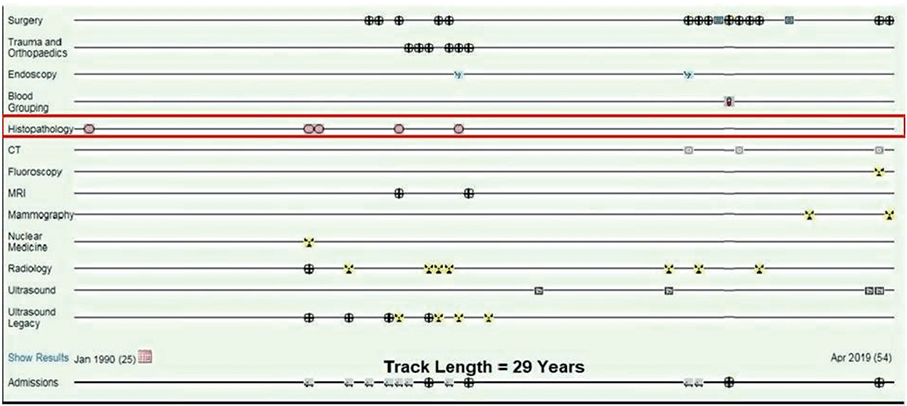
Figure 1. Screenshot of e-records of a spina bifida patient
The histopathology timeline (red box) indicates record icons that provide useful orientation points for other clinical documentation. ©2010–2019 University Hospital Southampton NHS Foundation Trust
Pathology & Histology
New reports are immediately added to the live database and are displayable as soon as they are signed off. There is no significant latency in the display of the ‘cellular pathology’ timeline within UHSLifelines.
The utility of immediacy of access to historic cellular pathology records is both anecdotal and experiential. One surgical user of UHSLifelines reported that:
in a recent outpatient consultation, a patient had been referred with a recurrent goitre following earlier surgery in the district in 1996. The old operating records had been lost, but I was immediately able to understand the fact, date and the type of the earlier thyroid surgery directly from the 1996 histopathology report.
Concurrently, we have been able to develop the Southampton Breast Cancer Data System (SBCDS), which contains 20,000+ ‘whole-of-life’ records of patients whose diagnosis and treatment dates back to the late-1980s [3, 4].
Of course, many of the older histopathology records apply to patients who have since died. These “post-mortem” records nevertheless have particular value for clinical research projects, as evidenced in the creation of the SBCDS.
Readers who work in clinical laboratories producing hematology, biochemistry, immunology, microbiology and other test results may wonder whether and how we display such results on the Lifelines interface. It is quite possible to display any results for which serial reports exist with the appropriate title/timestamp metadata. We currently display blood group and save and transfusion records, and we added a covid test result timeline in 2020 to help visualize the covid history of every patient
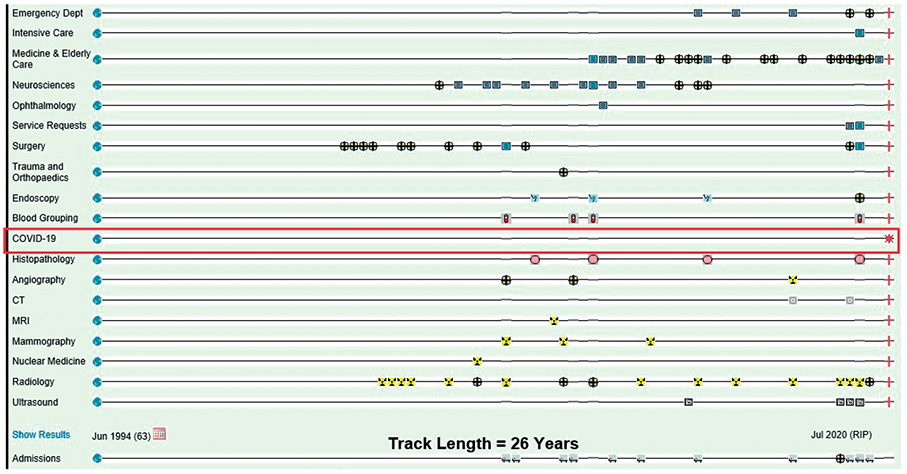
Figure 2. Image of Screenshot of e-records demonstrating the addition of a Covid test result timeline
However, we found that displaying all blood and other test results generally produced Lifelines screen overload, so we store and pull such data from our legacy systems on demand in a conventional manner.
In summary
Cellular pathology records provide reliable, consistent and validated documentation of critical transition points in individual lives and disease progression. They retain fundamental clinical and research value long after their immediate clinical utility has passed, as long as they can be readily accessed.
We have demonstrated how new life and utility can be brought to electronic cellular pathology records of any age, through importation of the original data files into a modern database; linking directly into the EPR and specifically into a data visualization interface; and creating access to those files in an appropriate retrieval and visualization system.
The digital transformation of global health services is still at an early stage. Our interactive, timeline-structured and iconographic EPR interface represents a radical, agile and iterative experiment in clinical data visualization and interaction which is still in evolution.
Nevertheless, we have found that the ability to visualize an entire “pathology-enriched” EPR on a single screen has profound consequences for the clinical user. It transforms the ‘here, now and in the very recent past’ interaction with clinical and pathology records, into a ‘whole-of-life’ or ‘whole-of-disease-process’ interaction.
At present, the UHS Lifelines interface is bespoke to the Southampton clinical data estate. However, we hope that this report will help to stimulate others to consider how better to preserve, use and present pathology records within their own EPR.
Figure 2. Screenshot of e-records demonstrating the addition of a Covid test result timeline (red box)
©2010–2019 University Hospital Southampton NHS Foundation Trust
Acknowledgements
This article is derived from Rew DA, Hales AA, Cable D et al. New life for old cellular pathology: a transformational approach to the upcycling of historic e-pathology records for contemporary clinical uses. J Clin Pathol 2022;75(4):250–254 [1], published under Creative Commons licence BY 4.0 (https://creativecommons.org/licenses/by/4.0/). I am pleased to acknowledge the contributions of my co-authors to that paper which have underpinned this article.
The author
David Rew MCh FRCS, Consultant Surgeon
University Hospitals Southampton NHS Foundation Trust,
Southampton, UK
E-mail: dr1@soton.ac.uk
References
- Rew DA, Hales AA, Cable D et al. New life for old cellular pathology: a transformational approach to the upcycling of historic e-pathology records for contemporary clinical uses. J Clin Pathol 2022;75(4):250–254 (https://jcp.bmj.com/content/75/4/250.long).
- Hales AA, Cable D, Crossey E et al. Design and implementation of the stacked, synchronised and topographic timeline-structured electronic patient record in a UK NHS Global Digital Exemplar hospital. BMJ Health Care Inform 2019;26(1):e100025 (https://www.ncbi.nlm.nih.gov/pmc/articles/PMC7253264/).
- Rahman F, Hales AA, Cable D, Rew DA. Design features of the EPR-integrated Southampton Breast Cancer Data System (SBCDS), with timeline structured Whole-i-E records on 20,000 sequential cases since the 1970s. Br J Surg Volume 2021:108(Suppl 7)znb361.160 (https://doi.org/10.1093/bjs/znab361.160).
- Rahman F, Copson E, Hales AA, Rew DA. The utility of a timeline and episode structured breast cancer data system to study outcomes following neoadjuvant chemotherapy for cases stratified by HER2 status. Br J Surg Volume 2021:108 (Suppl 7)znb362.069 (https://doi.org/10.1093/bjs/znab362.069).