About this section
Essay Collections
Cancer Research
Clinical Practice
Papers on Digital Health Systems
Military Medicine and Strategy
Journal of the ASGBI
Multimedia

Ethical Editing:
Theme: Evaluating current ethical practices
A closer look
Publication ethics and the work of the
SCOPUS Selection Advisory Board
by David Rew - COPE 2011, Vol 3, pp 7-8
I've reached the age where I can no longer do my laundry without wearing my glasses. I look at those little tags with the helpful information - “machine wash separately,” “line dry do not bleach” - and I can't read a single word, let alone tell whether I'm supposed to use lukewarm water (30°C) or cook my clothing (90°C).
I distinctly remember the day—some 30 years ago—when I discovered that there were things in the world I wasn't seeing clearly. With a friend's glasses perched on my nose I went into the bathroom to wash my hands. I looked at myself in the mirror. What WAS that on my face? Dry skin, pores, a variety of blemishes. With glasses on, I discovered a different reality.
In the publishing world, as well as in the laundry room, being able to see clearly is partly dependent on having the necessary tools. How do you know whether your journal upholds ethical standards? One way is to use the COPE Audit, described on page 6.
Consulting our peers is another way we evaluate our current ethical practices. In order to know what standards to set, and whether the standards we set are workable, editors, publishers, regulators, and organizations like COPE form committees (see From the Field on page 7). We meet in small groups to discuss ethical problems (see the Feature on pages 5 and 6). And we create advisory boards to raise the standards of the industry (see this issue's Peer to Peer commentary on page 8).
But it's not enough to look at what's easy to see; we have to be willing to look under the surface. Willing to investigate the questionable manuscripts that we screen for plagiarism. Willing to require authors to reveal conflicts of interest. Willing to forego practices that are good for our journals' bottom lines, but don’t contribute to the quality of our manuscripts.
As Albert Einstein said, not only do we have the right to search for the truth; we have a duty to reveal wrongdoing. That's what being an ethical editor is all about.
Inside this issue
2-4 The Scoop from COPE
Council election results; launch of eLearning; US and Asia- Pacific seminars; grant awarded to Daniele Fanelli; interest in COPE plagiarism document
5-6 Feature
Three Hospitality and Tourism Management editors discuss three editorial issues
7 From the Field
Setting ethical standards in peer-reviewed publishing
8 Peer to Peer
David New describes the role played by the SCOPUS Content Selection Advisory Board
9 The Last Word(s)
The Scoop from COPE
A warm welcome to our new Council members!
The results of the latest elections have been tabulated and COPE is pleased to welcome three new members to Council: Cynthia Carter, Charley Miao, and Lars Ole Sauerberg.
Dr. Cynthia Carter is a senior lecturer in the Cardiff School of Journalism, Media and Cultural Studies, at Cardiff University in Wales. She has published widely, with particular research interests in children, news and citizenship, feminist media studies, and violence and the media. She is Founding Co-Editor of the journal Feminist Media Studies and is an editorial board member of numerous academic journals.
Charley Miao has worked as a Publisher at Oxford University Press, based in the OUP China Office, since March 2009. He was awarded the title of Associate Professor in the field of Applied Mathematics in 2001, and soon afterward stepped into the publishing world as a copy editor, English editor, head of the Editorial Office of the Chinese Journal of Computational Physics, and Deputy Secretary General of the Chinese Society of Computational Physics (CSCP). Charley worked for Higher Education Press (Beijing, China) as a Chief Acquisition Editor from 2004 to 2006 and then for almost four years as a journal project manager and a Senior Production Specialist for the Elsevier China office in Beijing.
Lars Ole Sauerberg, dr. phil., is Professor of Literature in English at the University of Southern Denmark, where he has also served in the administrative capacities of Pro-Vice-Chancellor and Dean. His research interests lie mainly in literature and criticism since 1900. He joined the Editorial Staff of Orbis Litterarum: International Review of Literary Studies in 1999, and took over in 2000 as General and English Editor.
Further elections will be held later in 2011 and early next year, as the terms of current Council members expire. In order to continue diversifying the membership, we would particularly welcome applications from India, Japan, and the Far East. COPE members interested in serving on Council can contact Linda Gough for further information: cope_administrator@publicationethics.org.
Launch of eLearning
The COPE eLearning course on Publication Ethics, a benefit available only to members, is expected to launch in mid-September. Designed for editors and publishers who want to improve their understanding of publication ethics, it provides tools and knowledge needed to address the many issues they face when editing a journal.
The course will launch with four modules: An Introduction to Publication Ethics, Plagiarism, Fabrication, and Falsification. Subsequent modules will include Authorship, Conflicts of Interest, Selective Reporting, Reviewer Misconduct, Editor Misconduct, Redundant Publication, and Unethical Reporting. Modules can be worked through in any order, but we suggest starting with the Introduction to Publication Ethics module, as this gives a good overview of the ethical issues that editors and publishers may face.
The modules all follow a well-defined structure, first defining the issue, then explaining how you can spot it, and finally giving you tools for addressing problems that are uncovered. Some modules contain multimedia, such as a video or piece of audio (transcripts are available). There are multiple-choice questions at various points so that you can review your knowledge. Further resources include web links and articles to help you further increase your understanding of the topic.
The course does not lead to a formal qualification, but you can print a certificate of activity after completing each module.
All modules will be reviewed periodically. We welcome your feedback! Comments can be provided at the end of each module.
COPE's first discussion paper — "How should editors respond to plagiarism?" — has been downloaded 592 times since it was posted on the website (www.publicationethics.org/resources/discussion-documents) in May 2011.
See the Summer 2011 issue of Ethical Editing for an overview.
The Scoop from COPE
California to Host North American Seminar
COPE's 3rd North American Seminar and Forum will head west this year, to La Jolla, California, on the West Coast of the United States. The Forum will be held on Monday, October 31, from 2–5 pm, with the Seminar following on Tuesday, November 1, from 10 am to 5 pm.
The theme of this year's Seminar is Authorship. In addition to three invited talks (see below), there will be breakout sessions in the afternoon, with discussion of cases posing ethical problems, and opportunities to network with other editors and share your experiences and challenges. Editors, authors, and all those interested in improving the standard of publication ethics are welcome to attend.
The Seminar will feature the following invited speakers and topics:
- Lisa Bero, Professor of Clinical Pharmacy and Health Policy, University of California, San Francisco, will talk on ghosts, guests, and other distortions of authorship in medical and scientific journals
- Dave Kochalko, Vice President of Product and Market Strategy at Thomson Reuters, focusing on Intellectual Property and Science, will discuss ORCID, Inc., a non-profit organization which has brought together the leaders of influential universities, funding organizations, societies, publishers, and corporations from around the globe to promote accurate identification of researchers and their work
- Professor Robert Guralnick, University of Southern California, Managing Editor of the peer-reviewed journal Transactions of the American Mathematical Society, will discuss authorship issues in mathematics and related issues regarding refereeing for mathematics journals.
The COPE Forum is a meeting at which COPE members with ethical problems present anonymized cases and receive advice from their peers. Cases for the October 31 Forum should be submitted to cope_administrator@ publicationethics.org by October 14, 2011. Members who cannot be at the meeting to present their case should be available to present by telephone. Nonmembers cannot submit cases but are welcome to attend the Forum. There is no cost for attending just the Forum.
The Forum and Seminar will be held in the Natural Sciences Auditorium at the University of California, San Diego. The Seminar is free for COPE members and $150 US for non-members. To register, see the Events section of the COPE website: www.publicationethics.org. Non-members wishing to attend the Seminar and Forum for free should contact cope_administrator@ publicationethics.org for details on how to join COPE.
The deadline for registration is October 14, 2011.
COPE Grant Awarded to Project Examining Published Errata
COPE has awarded its June 2011 grant to Donal Keane, a Research Fellow at the ESRC Institute for the Study of Science, Technology and Innovation at the University of Edinburgh, for the project "No Study's Perfect: A Cross-Disciplinary Analysis of Published Errata". Keane, who gave a presentation at the March 2011 COPE European Seminar (see the Summer 2011 issue of Ethical Editing), plans to conduct a large quantitative study analyzing errata and correction notes published in more than 11,000 journals listed in the Essential Science Indicators database.
"Mistakes in research are inevitable, and publishing corrections is vital to the integrity of the literature," Keane said in his application. "The prevalence, nature, and impact of errors across disciplines are unknown. While large studies have looked at retractions, studies on errata are small, limited in scope, and rather different in methods and aims."
The study will proceed in three stages. In stage 1, general patterns will be analyzed, such as the prevalence of errata in 22 disciplines and in different journals, and trends over the years. Stage 2 will look at the nature of errata and their predictors, evaluating up to 150 errata for each of the 22 disciplines and a maximum of 3,000 published papers. Stage 3 will evaluate journals' editorial policies for errata and corrections, comparing journals that publish high and low rates...
The Pacific Ocean and the southern California coast.
1st Asia Pacific seminar in Melbourne
Expanding on its successful European and North American Seminars, in 2011 COPE will offer its first Asia Pacific Seminar, to be held in Melbourne, Australia, on Monday, November 14, from 9 am to 5:30 pm.
The theme of the seminar is how publication ethics is similar across different disciplines. Journal editors, researchers, and authors from the four points of the scientific compass—physical sciences, life sciences, social sciences, and health sciences—face many of the same ethical challenges. COPE's 1st Asia Pacific Seminar will provide insight from four speakers:
- Social sciences—“Publication ethics as a manifestation of professional ethics,” presented by Alfred Allan, who teaches ethical issues in psychology, conducts research on ethics in professional practice at Edith Cowan University, and is a fellow of the Australian Psychological Society
- Health sciences—“The range of conflicts of interest and how they should be managed,” presented by Neville Gibbs, editor of Anaesthesia and Intensive Care
- Physical sciences—“Duplicate and salami publications in science,” presented by Richard O’Hair, editor of the Journal of the American Society for Mass Spectrometry and a chemist at Melbourne University
- Life sciences—“Managing errors in the literature: whether inevitable, inadvertent, or intentional,” presented by David Vaux, Walter and Eliza Hall Institute, a double-blind peer review advocate, and a specialist at spotting image manipulation
The morning will begin with discussion of a hypothetical ethics case written by David Vaux and Suzanne Morris. The afternoon will feature a COPE Forum, a meeting at which COPE members with ethical problems present anonymized cases and receive advice from their peers. Members throughout the world are invited to submit cases for the November 14 Forum. If you are not attending this seminar, you should be available by telephone to present the case. Please submit cases directly to cope_administrator@ publicationethics.org by October 31, 2011.
The Seminar and Forum will be held at the RMIT-GW Building, 155 Cremorne Street, Richmond, Melbourne, Victoria, Australia. The seminar is free for COPE members and $150 AUD for non-members. To register, see the Events section of the COPE website: www.publicationethics.org. The deadline for registration is October 31, 2011.
Poster presentations at the Melbourne meeting
In a new venture, COPE also welcomes submissions of publication ethics work for presentation as a poster at the Asia Pacific seminar. The topics considered will be publication ethics-oriented research or information about ethical policies, techniques, collaborations, and initiatives. COPE will assess submitted abstracts for quality, relevance, and suitability for COPE's membership. The extended deadline for abstract submission is September 15, 2011. Further details are available at www.surveymonkey.com/s/W9R99XW.
FEATURE
Ethical standards of Hospitality and Tourism Management journals: three editors discuss three ethical issues
by Clayton Barrows
As more and more journals from non-medical disciplines join COPE, it becomes increasingly evident that ethical issues are not equally relevant in all disciplines. In this issue's Feature article, three editors of Hospitality and Tourism Management journals offer their perspectives on three ethical issues.
Hospitality and Tourism Management (HTM) is an applied, business-based academic area that is focused on a specific set of industries (hotels, restaurants, travel, etc.). It is strongly related to other business disciplines (such as marketing and finance), but perhaps most closely aligned with the services management literature. The hospitality and tourism management literature comprises roughly 100 journals worldwide, with around 20 of these making up the top tier. The journals are targeted primarily to hospitality and tourism faculty, with some journals also directed at managers who are working in the industry. Some practitioners even serve as reviewers.
There are approximately 200 HTM academic programs within the US. There are several very well established programs in the UK, Switzerland, and elsewhere in Europe. Most of the growth currently is in India and China.
Because of the relatively small number of programs (and journals), it's easy for editors to get to know each other at conferences and other gatherings. For a few years now, a small group of us have met to discuss various issues we face as editors. Recently I met with two of my colleagues, Anna Mattila and Fevzi Okumus, to discuss three topics relating to potential ethical conflicts: conflicts of interest, citations, and calculation of acceptance rates.
Conflicts of Interest
Strictly speaking, we believe that conflicts of interest related to potential financial profit by authors are probably more applicable to journals focusing on the sciences, where research is often funded by third parties. It is often quite different in HTM, with much research being funded, or subsidized, by one's own department rather than for-profit businesses. Under circumstances where research projects are privately funded, it is often managed on a consulting basis with the understanding that there will be a delay (sometimes of several years) before the results can be submitted to a journal for consideration. Further, there are far fewer opportunities to secure grants. Therefore, the potential for conflict of interest is greatly reduced, unless one considers the possibility of personal gain (other than monetary) by publishing. While the potential for conflict is less, we acknowledge that the possibility exists.
Although none of the three journals which we collectively serve as editors has a specific journal policy addressing conflict of interest, we are aware of and abide by our publishers' COPE policies. We agreed that the possibility of introducing a policy, such as that of the International Committee of Medical Journal Editors, has merit but may not be necessary at this time.
Perhaps more pertinent for HTM journals are two further ethical issues: using citations as a way to improve a journal's impact factor and the calculation of acceptance rates.
Citation of a journal's own articles
There is an increasing trend toward journal editors asking/encouraging authors to cite articles published in the journal to which the manuscript was submitted, generally after the first review in the journal. This has been observed in other business disciplines, but does not seem to be a growing trend in the hospitality and tourism journals.
FEATURE
Should this issue be broached with authors, and if so, how? We agreed that editorial board members should be instructed to evaluate reference lists for relevance and a sufficient number of references. Manuscripts that include references of articles already published in the journal indicate that the author(s) have shown "due diligence" in reviewing prior issues of the journal. However, if references are found to be insufficient in either quantity or quality, it becomes the reviewer's responsibility to bring this to the author’s attention. In some cases, this responsibility may fall on the editor. In such cases, we agreed that authors should be encouraged to better familiarize themselves with the hospitality literature in general, as well as with previous issues of the journal in particular. This would be especially true if an author’s expertise fell outside of the HTM literature. We also agreed, however, that any suggestions to add references of articles from previous issues of the journal, at the exclusion of published articles in other journals, could raise ethical issues. For instance, is an editor requesting additional references (1) in an attempt to create a common theme of the literature, (2) in an attempt to get the author to become more familiar with the relevant literature, or (3) simply to raise the impact factor of his or her own journal? Any suggestions for increasing the reference list should be offered in a responsible way. Editors and editorial board members should be encouraged to provide a list of relevant articles, as opposed to making a general request to increase the number of references from that journal.
Calculation of acceptance rates
The final topic we discussed was the calculation of acceptance (or rejection) rates for journals. Our own journals have acceptance rates ranging from 11% to 25%. Acceptance rate information is becoming more important to authors because the rates drive journal rankings (along with impact factors). Concerns about acceptance rates include how they are calculated, the time frame used, and the fact that they are often self-reported. We also had concerns regarding how some electronic submission systems automatically calculate acceptance rates. Inconsistencies can occur depending upon how the numerator is determined, and due to the time frame used. We agreed that calculations should include “desk rejections” but should not include invited papers, book reviews, or special issues (these should be calculated separately), and that a reasonable time frame is one calendar year. Shorter time periods can result in wide fluctuations, and longer time periods seem unnecessary. It was also pointed out that some journal editors may be including “revise and resubmits” as multiple submissions, although none of us do. In short, we agreed that there may be some inconsistencies in how these rates are calculated, that there is the potential for misuse, and that acceptance rates are becoming a more important metric, especially for tenure and promotion. More uniformity in the calculations is needed.
This article was prepared by Clayton W. Barrows, Editor of the International Journal of Hospitality and Tourism Administration, a Routledge publication. The author would also like to thank Anna Mattila, Editor, Journal of Hospitality and Tourism Research (published by Sage) and Fevzi Okumus, Editor, International Journal of Contemporary Hospitality Management (published by Emerald) for their contributions.
The COPE Audit
The COPE audit is a simple tool for checking whether your journal adheres to ethical standards. It's divided into 22 principles, which are listed under 5 headings: 1) Detecting, investigating and preventing publication misconduct, 2) Authorship, 3) Transparency, 4) Conflicts of Interest, and 5) Handling appeals and complaints. Each principle is paired with questions about the journal’s current status, suggestions for how editors can help their journal meet the standards, and links to supporting information in the form of guidelines, published articles, and other COPE resources. There’s even a website with an interactive movie on research misconduct (http://ori.dhhs.gov/TheLab/).
The audit—a benefit of COPE membership—is available only to members, and can be accessed by signing in to the COPE website (www.publicationethics.org) and clicking on Resources.
Setting ethical standards in peer-reviewed publishing
Soliciting input on ethical issues from a variety of sources has become a popular approach to standard setting. Below you'll find four topics addressed by committees recently.
UK policy study to focus on data
The Royal Society in London is one of the world's oldest scientific institutions, and has been publishing peer-reviewed journals since the 1660s. But the Society is also looking to the future, and this year announced a new policy study entitled “Science as a public enterprise,” focusing on issues about access to data.
COPE has responded to its call for evidence, in particular to questions about the ethical principles that should govern access to research results and data; activities currently under way that could improve the sharing and communication of scientific information; and how new media may change the ways in which scientists conduct and communicate their research. Liz Wager, COPE Chair, who compiled their response, commented: “Although COPE does not yet have a policy on data sharing, we recognize that this is an increasingly important issue and something we should be thinking about seriously. The Royal Society study provides a good opportunity to set out our initial thoughts on the subject and start to become involved in this debate.”
The COPE response set out some of the potential benefits, harms, and costs of data sharing, and suggested that these are likely to vary between disciplines. However, it also noted that access to raw data might speed up misconduct inquiries and make it easier to spot errors.
The Royal Society plans to look at how the use of scientific information affects scientists and society, and particularly, how scientific information should be managed to support innovative and productive research that reflects public values. For further information see https://royalsociety.org/policy/sweap/.
Retractions and review articles
COPE Case number 11-07, discussed at the June 2011 Forum, was submitted by the editor of a reviews and features journal which had published a review article citing six publications which were later retracted in connection with a highly publicized misconduct case. The editor analyzed the review article and determined that around 18% of the body text—primarily the more novel insights—cited the six references. “Quality—what was said that is clearly more important than quantity—it is exceedingly hard to judge whether the retraction of the six articles nullifies those conclusions and insights,” the editor said. The editor's dilemma was how to communicate those findings to the journal's readers, and whether it would be necessary in the future to expend already stretched editorial resources to investigate the cited papers for potential retractions or other articles.
Attendees at the Forum agreed that the journal’s readers should be notified, and that they could then “evaluate the review and draw their own conclusions.” Attendees favored issuing an expression of concern rather than a correction. Another suggestion was to write an editorial discussing whether removal of the six references alters the conclusions of the paper. For the complete text of the case see www.publicationethics.org/cases.
UK peer review report released
The United Kingdom House of Commons Science and Technology Committee, which conducted an inquiry into peer review between January and July 2011 (see the Summer 2011 issue of Ethical Editing), has published its report “Peer Review in Scientific Publications”. The committee recommended the creation of an external regulator overseeing research integrity, as well as suggesting that all UK research institutions identify a member of their staff to take the lead on research integrity. It also voiced “concerns about the use of journal Impact Factor as a proxy measure for the quality of individual articles.” In Section 6 of the report, “Publication ethics and research integrity,” the Interim Chief Executive of the Royal Society of Chemistry, Dr Robert Parker, is quoted as saying that the guidelines produced by COPE are “broadly much an industry standard now.” COPE Council member Irene Hames was the Specialist Adviser to the Committee for the inquiry, and COPE Chair Liz Wager testified before it. The full report is available on the House of Commons website (see http://tinyurl.com/3j3ynsb).
The SCOPUS Title Evaluation Platform
SCOPUS, an abstract and citation database, uses a generic scoring tool to assess journals applying to join the database. STEPP (the SCOPUS Title Evaluation Platform) “assesses each and every journal against a core set of advisory and mandatory standards to optimise its credibility, accessibility and usability in the SCOPUS database.” Among the mandatory factors is a requirement that every journal accruing to the system “publish a clear and concise statement of Publication Ethics and Policies in respect to malpractice, and that each and every publisher will be held to account for the performance and compliance with this policy of every journal in its portfolio.”
For more on the SCOPUS initiative see the Peer to Peer commentary by David Pre...
Publication ethics and the work of the SCOPUS Content Selection Advisory Board
by David Rew
SCOPUS is Elsevier's citation system. Commercially, it competes with Web of Science, and functionally with various public data resources, including PubMed and Google Scholar. Some 18,000 journals have so far accrued to the SCOPUS system. The number of non-accrued journals worldwide is estimated at well above 80,000.
Editors, publishers, and authors welcome the benefits of citation indexing on the major data systems. There is a substantial and continual demand for new listings of peer-reviewed journals from around the world and across all subject disciplines, amounting to many hundreds of applications to SCOPUS every year.
Since its inception, SCOPUS has been guided by an independent advisory board of editors and librarians. In 2009, a new, international, and multidisciplinary Content Selection Advisory Board (CSAB) was formed, with some 15 experienced journal editors acting as Subject Chairs. These chairs meet twice a year and are in regular contact at other times. Their primary task was to set reasonable and objective standards for the assessment of journals applying to SCOPUS. In turn, these standards would also be used to re-evaluate those journals already listed on the system, assuring SCOPUS users of the quality of the journals listed in SCOPUS over the long term.
The SCOPUS Board also took the view that journals failing to meet the quality thresholds on initial application should be given advice and the opportunity to improve. It soon became apparent that many of the applicant journals were failing to make any statement of policy on publication ethics and publication malpractice. Herein lay a significant opportunity for the SCOPUS CSAB.
In 2010, following thorough debate, we agreed that from that point on, all journals seeking listing or retention within SCOPUS would be obliged to publish a clear policy on publication ethics and publication malpractice, as a core condition of acceptance. We elected not to dictate the specifics of those policies. Instead we are directing applicants to various excellent independent resources, including those of COPE, the World Association of Medical Editors (WAME), and the International Committee of Medical Journal Editors (ICMJE).
Of course, we recognize that publishing such policies is not the same as ensuring compliance. Many of our applicant journals are outside the mainstream publishing houses, and represent a wide variety of institutions, national and regional bodies, and socio-linguistic groups worldwide. We felt that this requirement would be a significant step in raising standards in publication ethics and publication malpractice policy, both by raising the profile of the issue and by reducing the “wriggle room” for those who have yet to understand the full ramifications and implications of an international strategy against publication malpractice.
The advisory work of the SCOPUS CSAB with respect to publication ethics and malpractice is still evolving. We are watching with interest the evolution of various technologies for text matching and plagiarism detection, and we seek to contribute to the debate on how best collectively to identify and publicize miscreants and misdemeanours across the publishing industry. We look forward to much vigorous debate on these and many other matters in this rapidly changing field, and to continuing engagement and support for the worthy principles which COPE espouses.
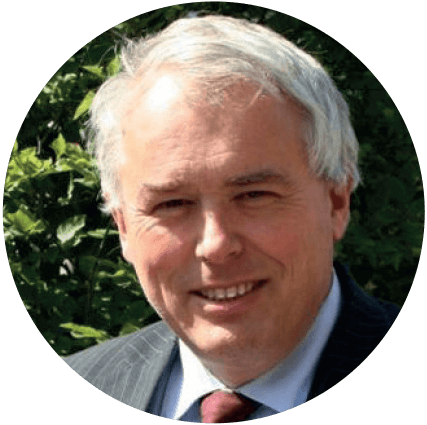
David Rew, MA, MChir, FRCS, is a Consultant Surgeon with Southampton University Hospitals in the United Kingdom. He was Editor in Chief of the European Journal of Surgical Oncology from 2003 to 2009 and a member of the COPE Council from 2006 to 2010. In 2009 he became Medical Subject Chair for the SCOPUS Content Selection Advisory Board.