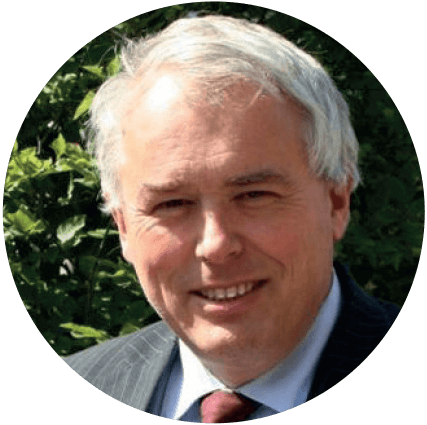
An Overview of My Professional Career
I studied Natural Sciences for Medicine in Cambridge (1975 to 1978) and Clinical Medicine at Kings College Hospital, London (1978-1981). I qualified in Medicine with the MBBS Degree from the University of Cambridge in 1981, and thereafter trained widely in the Surgical Specialities in Teaching Hospitals in London, Southampton and the South East of the UK.
I was awarded the Fellowship of the Royal College of Surgeons of England (FRCS) in 1985, and the Higher Degree of Master of Surgery of the University of Cambridge in 1991.
I was appointed as an Honorary Consultant Surgeon to the University of Leicester Hospitals in 1994. I returned to Southampton as an NHS Consultant Surgeon in 1999, where I have also been an honorary member of the Faculty of Medicine of the University of Southampton.
I worked in full time NHS Employment at the University Hospital Southampton until January 2022 in delivering specialist surgical and cancer services, since when I have worked at the Royal South Hants Hospital on a regular sessional contract.
My contributions to Professional Life at National Level
In parallel with my NHS Career, I served the Crown from 1975 to 2018 in the Territorial, Airborne, Regular and Army Reserve as a General and Trauma Surgeon, with operational deployments to The Gulf (1991 and 2003) and to Helmand in 2008.
This work was recognised by my peers with the rare award of the QVRM (now KVRM) in HM The late Queen Elizabeth’s Birthday Honours List in 2015.
I have been a strong supporter of the British Association for Surgical Oncology (BASO), the UK Association for Cancer Surgery, over my career, both on its Advisory Board and as National Secretary of the Association from 2000 to 2002.
I have also been a strong supporter of the Association of Surgeons of Great Britain and Ireland, both on its Advisory and Executive Boards, and as the Director of Communications from 2012 to 2016.
An Overview of my Academic and Publishing Career
In parallel with my clinical career, I have had a wide ranging and continuing academic career, as a Cancer Research Campaign Fellow (1989-91); as a Senior Lecturer in Surgery to the University of Leicester (1994-1998) and as an Honorary Senior Lecturer to the Faculty of Medicine to the University of Southampton (1999 to the present).
From 1996 to 2002 I served on the Advisory Board of the European Journal of Surgical Oncology (EJSO), and between 2003 and 2009 as Editor in Chief of the Journal, over which period the journal dramatically increased its global reach and academic status.
From 2008 to 2010, I served on the Advisory Board of the Committee on Publication Ethics, COPE. COPE is an organisation which has global influence over quality standards in academic publishing.
In 2009, I was appointed to the unique role of Subject Chair for Medicine to the Advisory Board for the SCOPUS academic reference and citation system. SCOPUS curates global quality assurance standards for academic journals, including some 8000 Medicine and Healthcare journals and is in continual expansion. I continue as an active member of the Board, having appraised more than 3500 candidate journals for the system to date.
In 2017, I very much appreciated the award of a Visiting Professorship by Southampton Solent University, in recognition of my contributions to undergraduate education at the University in respect of projects relating to our digital transformation programme at University Hospital Southampton.
Also in 2017, I was appointed on a three-year tenure as a member of the Strategic Advisory Team for Healthcare Technologies of the UK Engineering and Physical Sciences Research Council (The EPSRC).
I was a member of the Assessment panel for the first EPSRC national Digital Health Hub competition, which attracted almost 40 University Consortium applications from across the UK in January 2023. I was privileged to chair the Interview Panel for the ten shortlisted applications in February 2023.
Since 2018, I have contributed regularly to the Innovate UK Grant Competition Portfolio as an application assessor for healthcare related submissions.
Overview of my Clinical Research and Enterprise Activities
I have sustained an active programme of clinical and technical research innovation throughout my surgical career.
As a Cancer Research Campaign Fellow in Southampton (1989-1991), I developed a programme of research into the measurement of cancer cell proliferation in living tumours and tissues using laser flow cytometry. This was the basis of my Master’s Thesis.
As a Senior Lecturer in Surgery at the University of Leicester (1994 to 1999), I developed the UK’s first Laser Scanning Cytometry Facility at Glenfield Hospital, Leicester, from which a number of papers and PhD Theses were published.
As a Consultant Surgeon in Southampton, I have led and worked with a small team of computing specialists in the transformation and usability of clinical information systems. A number of our products and systems are now central to the University Hospital clinical data estate. The key outputs of this programme have included:
- The UHS Lifelines (UHSL) multi-timeline structured Electronic Patient Record (EPR) Interface, which brings together all relevant records, documents, events and reports in a single, simple and highly intuitive format on a desktop screen for each and every patient who is registered with the Hospital
- The Southampton Breast Cancer Data System, (SBCDS), which integrates UHS Lifelines with the individual, whole-of-life and whole-of-disease-course records of more than 20,000 patients with breast cancer and related diseases between 1980 and 2020.
- The Southampton Enhanced Somerset Cancer Register Module (SCR+/SCRPlus), which incorporates lessons learned from the UHSL and SBCDS Projects in a visually rich and easy to use support system for all cancer multidisciplinary cancer teams and their meetings in Southampton. SCR+ makes directly available and actionable all cancer casework across the hospital, which was never previously or so easily accessible.
I was also closely involved in the development of the UHS Electronic Document Management System (EDMS) programme, which led to the acquisition and integration of the Hyland Inc. (Cleveland Ohio) Onbase Enterprise Content Management System. I was subsequently invited to serve a two-year term on Hyland’s International Advisory Board.
My articles and publications relating to this body of work are listed elsewhere on this website see here. Many of these references are also provided as full text for free downloading. They are also listed on the University of Southampton EPrints Server https://eprints.soton.ac.uk/
and on the international Orcid system https://orcid.org/.
My global Orcid author identifier number is https://orcid.org/0000-0002-4518-2667
Teaching, Training and the Education of other Health Care Professionals
Professional Surgical Leadership mandates the training, education and the passing on of hard-won skills and experience to other health professionals and to the next generation of doctors, surgeons, nurses, theatre teams and supporting staff.
As a surgeon to two large NHS University Teaching Hospitals, I have been heavily committed to teaching and education programmes for undergraduate and postgraduate students and trainees in the NHS workplace throughout my career.
My educational responsibilities have been further exercised:
- Through my duties as Editor in Chief of the EJSO. This included the communication of quality to a diverse international audience of manuscript authors and reviewers;
- And through the exercise of my continuing duties as the Subject Chair for Medicine on the SCOPUS Content Selection and Advisory Board. This similarly includes the communication of quality to a diverse international audience of academic Publishing Editors, Journal Editors and Academic Board Members.
However, my greatest experience of the art of clinical teaching and training has been as a senior member of the consultant cadre in the training and preparation of healthcare professionals for operational service in the Gulf, Iraq and Afghanistan. In this scenario, simulation and mission rehearsal have been elevated to a high art by the training teams of the UK’s Defence Medical Services. The benefits have been proven in the remarkable life and limb preserving outcomes of the work of these cadres.
A Brief Synopsis of my Career in the Territorial, Regular and Army Reserve, 1975-2018
For most of my professional career, my service to the NHS has run in parallel to my volunteer reserve service, which in turn has profoundly influenced my approaches to leadership, problem solving with scarce resources, and innovation in service delivery.
On leaving secondary education at Christ College Brecon in 1974, I was briefly commissioned into the Regular Army following a course of training at the Royal Military Academy Sandhurst in early 1975.
This was followed by attachments to various units of the British Army of the Rhine (BAOR) in what was then in the depths of the “Cold War”.
On entering University in 1975, I transferred to the Defence Medical Services Volunteer Reserve, and then to the Airborne Forces Reserve, where I earned my Parachute Wings in 1980 and with whom I served until 1987.
In October 1988, though my military connections, I was introduced to the civilian Afghan Aid Charity, with whom I worked in surgical units for a month in Peshawar on the Northwest Frontier of Pakistan with Afghan refugee groups, and learned much.
I transferred back to the Defence Medical Services Reserve in 1987, from where I was deployed to the Gulf in 1991 as a member of a mobile surgical team on the front line of Operation Desert Storm (Op Granby), in the liberation of Kuwait from Iraqi occupation.
Between March and May 2003, I was again mobilised to Kuwait and Iraq with the reserve Midlands Field Hospital, this time as a Consultant Surgeon.
My third operation deployment as a military and trauma surgeon was to Afghanistan in the winter of 2007-2008, where I participated as the senior surgeon in the operational commissioning of the renowned Camp Bastion Hospital in Helmand Province.
The collective work of the small cadre of health professionals who deployed to Iraq and Afghanistan has had a profound influence on the development of the modern NHS Trauma Service, and I have been grateful to my various NHS managers for indulging my absences on operational tours throughout my surgical career.
My final decade of Volunteer Reserve Army Service, 2008 to 2018, was with the Headquarters Unit of the Army Medical Services near York, where I was engaged with a range of training, eventualities planning and civil engagement activities as far afield as Sierra Leone.